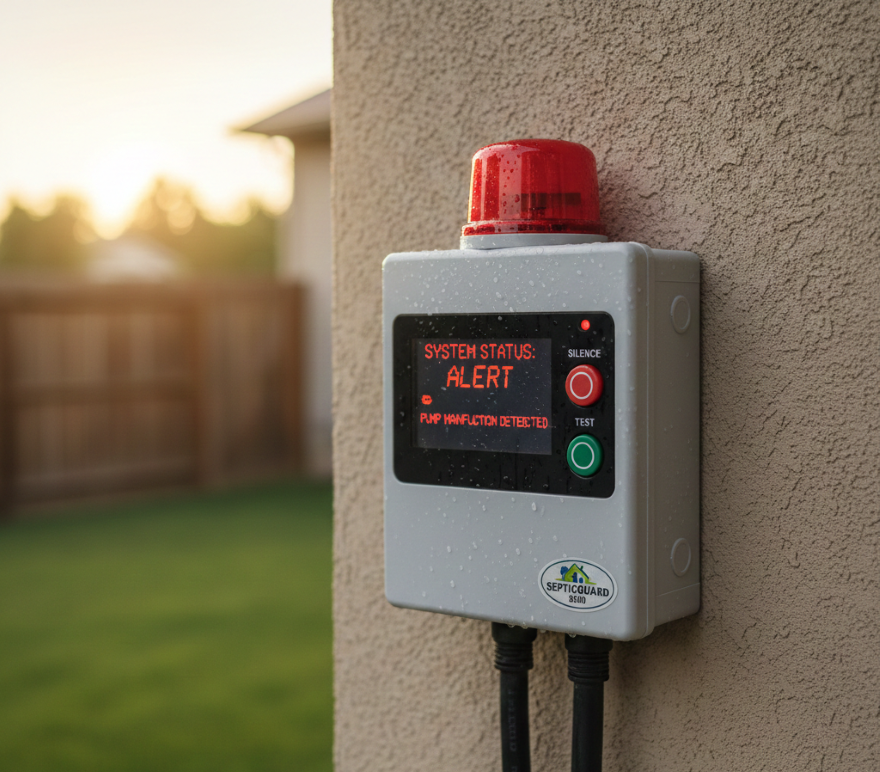
A septic alert system warning means your tank needs immediate attention. When your alarm sounds, stop using water right away and call Mineo Bros Septic. The alarm indicates your tank is too full, which can lead to sewage backing up into your home or overflowing into your drain field.
Contact Mineo Bros Septic immediately when your alarm activates. Our technicians can diagnose whether you’re dealing with a pump failure, electrical issue, or full tank that needs pumping. Don’t wait for the problem to get worse—septic emergencies can cause thousands of dollars in damage if left unaddressed.
While waiting for our team to arrive, turn off all water use in your home. Check your alarm panel for specific error codes and look for standing water near your tank or drain field. If you notice sewage odors inside your home or see water pooling around your system, you’re dealing with an emergency that needs immediate professional attention.
Never ignore the alarm or assume it will resolve itself. The warning exists to prevent expensive damage to your system and protect your property from contamination.
Understanding Your Septic Alarm
Your alarm system monitors the water level in your septic tank’s pump chamber. When water rises above the normal operating level, a float switch triggers the alarm. This typically happens when your pump fails, something blocks the system, or excessive water enters the tank faster than it can drain.
The alarm gives you time to respond before sewage backs up into your house. Most systems include a timer that allows the pump several chances to activate before sounding the alarm. If you hear the warning, your system has already attempted to resolve the issue on its own.
Different Types of Alerts
Some systems have multiple warning levels. A yellow or first-stage alert might indicate rising water levels, while a red or second-stage alert means the situation is getting worse. Audio alarms often pair with visual indicators on a control panel, usually located near your electrical panel or in a utility area.
Immediate Steps to Take
When you hear the alarm:
- Stop all water use immediately (no showers, laundry, dishwasher, or toilet flushing)
- Check the alarm panel for specific error codes or indicators
- Look for standing water around your septic tank or drain field
- Note any sewage odors inside or outside your home
- Check your circuit breaker to ensure the septic pump has power
Why Septic Alarms Activate
Pump failure tops the list of causes. Septic pumps have a limited lifespan, and mechanical failure can happen without warning. The float switch that controls the pump can also stick or malfunction, preventing the pump from turning on even when it’s working properly.
Heavy water use overloads the system. Hosting guests, doing multiple loads of laundry in one day, or running water continuously can fill your tank faster than it can process waste. The ground around your drain field might be saturated from rain, preventing proper drainage.
Power outages affect your pump’s ability to move water out of the tank. Even brief outages can cause water to accumulate if they occur during high-use periods. Sometimes tree roots or debris block the outlet pipe, preventing water from leaving the tank.
Less Common Triggers
A broken or damaged pipe in your drain field can cause water to back up into the tank. Compacted soil from vehicles or heavy equipment driving over your drain field reduces its ability to absorb water. In some cases, the alarm itself malfunctions and sounds when nothing is wrong with your septic system.
What Not to Do
Don’t keep using water after the alarm sounds. Every gallon you add makes the problem worse and increases the risk of sewage backing up into your home. This includes avoiding dishwashers, washing machines, long showers, and frequent toilet flushing.
Never ignore the alarm or disconnect it. Some homeowners silence the warning and continue using water normally, which leads to system failure and costly repairs. The alarm protects your investment in your septic system.
Don’t attempt to repair the pump yourself unless you have proper training. Septic systems contain harmful bacteria and gases. Working on them without proper equipment and knowledge creates health risks.
When to Call for Help
Contact a septic professional if you notice:
- The alarm has been sounding for more than an hour
- Water or sewage appears near your tank or drain field
- Sewage backs up into your drains or toilets
- You smell sewage inside your home
- Your pump runs constantly but the alarm still sounds
Preventing Future Alarms
Regular pumping keeps your tank from becoming too full. Most households need pumping every three to five years, depending on tank size and water usage. Schedule inspections to catch potential problems before they trigger your alarm.
Spread out your water use throughout the week instead of doing all your laundry in one day. Fix leaking toilets and faucets promptly since they add unnecessary water to your system. Be mindful of what goes down your drains—avoid putting grease, chemicals, or non-biodegradable items into your septic system.
Maintaining Your Alert System
Test your alarm monthly by pressing the test button on the control panel. Replace backup batteries in your alarm system according to the manufacturer’s schedule. Keep the area around your alarm panel clear so you can hear it when it sounds.
Have your septic professional check the float switches and alarm components during regular maintenance visits. These simple steps ensure your warning system works when you need it.